Stop Guessing and Start Planning: Your Clinical Roadmap After Major Weight Loss

You’ve lost 50, 70, maybe 100 pounds. You’ve done the hard part. And now you’re standing in front of the mirror feeling something you didn’t expect: confused, deflated, and a little bit unrecognizable.
This is more common than anyone talks about. The loose skin, the hollowed-out face, the crepe-paper texture that wasn’t there before. You start Googling and suddenly you’re drowning in PDO threads, Endolift, RF microneedling, ResurFX, Plasma BioFillers, and chemical peels, with no idea which one to try first, whether you can afford it, or whether you should even be doing any of it yet.
So let’s cut through it. This isn’t a glossy treatment menu. It’s a frank, practical spending guide for people who’ve done serious work to get here and want to spend their money wisely.
Why Post-Weight-Loss Skin Is a Different Problem
Skin that’s been stretched significantly over months or years loses something it can’t fully get back on its own: elastin. Collagen degrades too, but elastin is what gives skin its snap-back quality. Once it’s gone, no cream, no amount of crunches, and no hydration routine will restore it. That’s not pessimism; that’s just physiology.
Patients on GLP-1 medications like tirzepatide or semaglutide are especially prone to this because the weight often comes off faster than skin can adapt. The face loses fat volume quickly, the neck softens, the jawline blurs. The body follows.
The good news: non-surgical treatments have come a long way. The better news: there’s a logical order to all of this, and knowing it ahead of time saves you money.
The Three-Tier Framework: Structure, Volume, Surface
Think of your skin like a house. Before you paint the walls or pick out new furniture, you need to check the foundation and framing. Post-weight-loss skin restoration
works the same way. You address structural laxity first, then restore lost volume, then refine the surface.
Skipping steps wastes money. Filling a hollow cheek before you’ve addressed underlying tissue laxity is like hanging art on a crooked wall.
Tier 1: Structural Tightening (Start Here)
This is your foundation work. The goal is to stimulate collagen, restore tissue tension, and re-anchor skin before you add anything on top.
PDO Threads
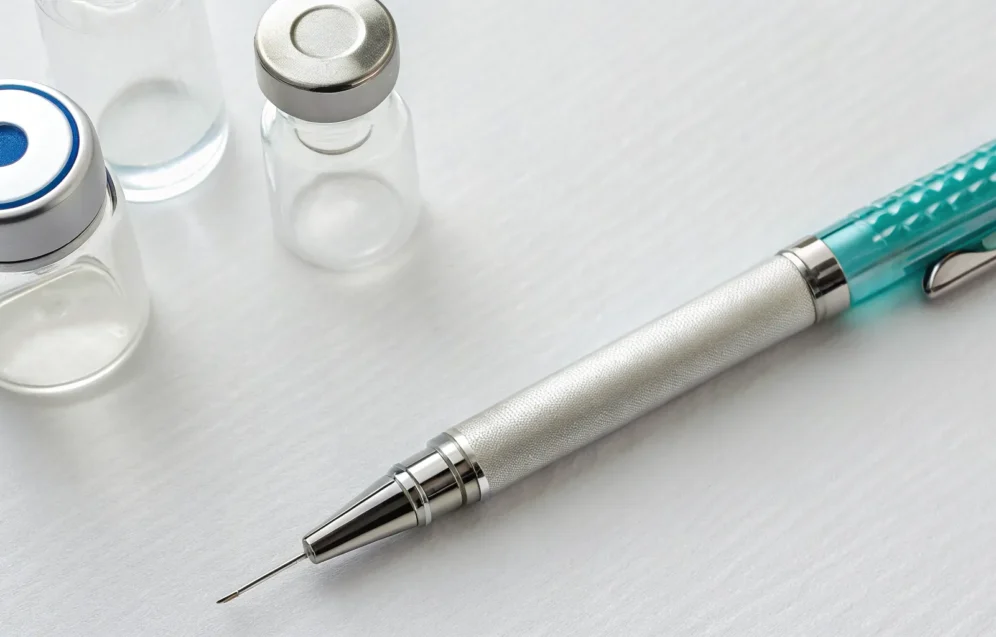
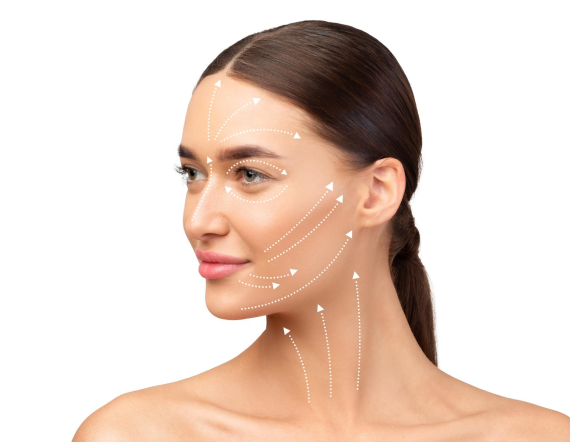
PDO (polydioxanone) thread lifts physically lift and reposition sagging tissue while simultaneously stimulating new collagen production as the threads dissolve over 6 to 8 months. For post-weight-loss patients, they’re particularly useful along the jawline, neck, jowls, and nasolabial folds.
Here’s the timing insight most people miss: you don’t have to wait until you’ve finished losing weight to start threads. In fact, getting PDO threads mid-journey can prevent worse sagging later. If your skin gets ongoing collagen stimulation during active weight loss, it has a better chance of keeping up with the fat loss beneath it. Waiting until the very end means you’re correcting more significant laxity rather than getting ahead of it.
Ballpark cost: $800 to $2,500 per session depending on the number of threads and area treated. Most patients benefit from a single session initially, with a maintenance session at 12 to 18 months.
Endolift
For patients with more significant skin laxity, particularly in the neck, lower face, or body areas like the inner arms and abdomen, Endolift uses a laser fiber delivered just beneath the skin’s surface to simultaneously melt fat and tighten tissue. It’s technically a minimally invasive procedure, not a true surgery, but the results go deeper than surface treatments can reach.
This is a strong option for patients who’ve lost a meaningful amount of weight on medications like Zepbound or Wegovy and are seeing neck laxity and jowling that threads alone won’t fully address.
Ballpark cost: $1,500 to $4,500 depending on the treatment area. A single session often produces noticeable results, with continued improvement over 3 to 6 months.
RF Microneedling
RF microneedling combines the mechanical collagen stimulation of microneedling with radiofrequency energy delivered at precise skin depths. It works well for diffuse laxity across larger areas, particularly the lower face, neck, abdomen, and inner thighs. Results build over 3 to 6 months, and most providers recommend a series of 3 sessions spaced 4 to 6 weeks apart.
Ballpark cost: $400 to $900 per session; budget $1,200 to $2,500 for a full series.
Tier 2: Volume Restoration (After Structure Is Addressed)
Major weight loss takes fat from everywhere, including places you actually want it. The midface, temples, under-eye area, and hands are common areas where patients suddenly look older or hollowed out despite feeling healthier than ever.
Volume restoration fills what’s missing. But if you do this before tightening the tissue around it, filler can look puffy or misplaced.
Dermal Fillers
Hyaluronic acid dermal fillers are the workhorse here. Cheeks, temples, nasolabial folds, and tear troughs respond well. The results are immediate and reversible. Most patients in the post-weight-loss phase need more volume than they expect, partly because they’re used to seeing a fuller face.
Ballpark cost: $600 to $900 per syringe. Most patients need 2 to 4 syringes for meaningful facial volume restoration. Budget $1,200 to $3,600 for a full correction.
Plasma BioFillers
Plasma BioFillers are a newer option that uses your own concentrated plasma to restore volume and stimulate tissue regeneration. They’re not as immediately dramatic as HA fillers, but they’re a compelling option for patients who want natural-origin volume restoration or who are building toward a surgical-free long-term plan. Results develop over 4 to 8 weeks and tend to look very natural.
Ballpark cost: Typically $600 to $1,200 per treatment, often done in a series of 2 to 3 sessions.
Tier 3: Surface Refinement (The Finishing Layer)
Once structure is restored and volume is back, surface refinement addresses the skin quality issues: textural irregularities, crepiness, uneven tone, fine lines, and sun damage that’s more visible now that your face has changed shape.
ResurFX
ResurFX is a non-ablative fractional laser that stimulates collagen in the upper layers of skin without significant downtime. It’s particularly effective for the crepey texture many patients notice in the neck, chest, and under-eye area after weight loss. Results are gradual and cumulative; most patients do 3 to 5 sessions spaced 4 to 6 weeks apart.
Ballpark cost: $350 to $750 per session.
Chemical Peels
Chemical peels work well as a complement to ResurFX or as a more budget-friendly surface option. Medium-depth peels can address pigmentation, rough texture, and mild laxity. They’re not a substitute for structural tightening, but as a finishing treatment, they earn their spot.
Ballpark cost: $150 to $500 depending on depth and area.
Building Your Skin Budget: Realistic Planning Numbers
Here’s how a practical phased plan might look for a patient who’s lost 70 pounds, is stabilizing their weight, and wants to address facial and neck laxity without surgery:
- Phase 1 (Months 1-3): Structural Foundation
- PDO threads: $1,500
- 1 Endolift session (neck/lower face): $2,500
- Estimated total: $3,500 to $4,500
- Phase 2 (Months 4-6): Volume Restoration
- 3 syringes dermal filler: $2,100 to $2,700
- Or Plasma BioFillers series: $1,500 to $2,000
- Estimated total: $1,500 to $2,700
- Phase 3 (Months 6-12): Surface Refinement
- 3 ResurFX sessions: $1,200 to $2,000
- 2 chemical peels: $400 to $800
- Estimated total: $1,500 to $2,500
Full roadmap estimate: $6,500 to $9,700 over 9 to 12 months. That sounds like a lot until you break it down to roughly $700 to $800 per month, which is less than many people spend on supplements, gym memberships, and meal delivery services combined.
HSA and FSA: Worth Knowing Before You Book
Many aesthetic treatments are not HSA/FSA eligible, but there are important exceptions. Treatments with a documented clinical or functional purpose may qualify, especially when prescribed or ordered by a physician.
At a physician-led practice, you have a meaningful advantage here. When your provider documents a medical rationale, such as skin breakdown, intertrigo (rashes in skin folds), or functional limitations from excess skin, HSA and FSA funds can potentially be used. This is worth a direct conversation with your provider before you plan your budget, not after.
Keep receipts and get itemized documentation. And if you’re mid-journey on a GLP-1 supported weight loss plan, talk to your provider about documenting the skin changes you’re experiencing along the way. That documentation matters.
The Timing Question Nobody Asks: Should You Start Before You’re Done Losing?
Yes, in many cases.
Conventional thinking says “wait until you’re at goal weight.” That logic makes sense for surgical procedures, where a 10-pound fluctuation post-op can compromise your result. But for non-surgical treatments like PDO threads and RF microneedling, there’s a real argument for starting earlier.
Collagen takes 3 to 6 months to remodel after stimulation. If you’re still 20 pounds from your goal, getting a thread treatment now means your skin is actively being supported during the final phase of your weight loss. You’re not waiting for the problem to get worse before treating it.
The practical rule: if you’re losing weight steadily and have at least 3 to 4 months before you expect to stabilize, non-surgical collagen-stimulating treatments are fair game. Injectables and volumizing treatments are better reserved for when you’re within 10 to 15 pounds of your target, because volume corrections made during active loss may need to be revised.
One More Thing Worth Naming
Post-weight-loss body dysmorphia is real. Patients who’ve lost significant weight sometimes describe feeling more self-conscious than they did before, not because the treatment didn’t work, but because the gap between how they feel and how they see themselves is still closing. The skin changes are real. So is the psychological adjustment.
A good provider acknowledges both. The aesthetic work helps. So does having a clear plan that makes you feel like you’re moving forward rather than just reacting to whatever bothers you most on a given day.
If you want to understand more about how your hormonal profile may be affecting your skin quality and recovery, our hormone therapy overview is worth a read. Hormones play a larger role in skin elasticity than most people realize, especially after rapid weight loss.
Bottom Line
Post-weight-loss skin treatment isn’t one thing. It’s a sequence. Structure first, then volume, then surface. Done in that order, with realistic timelines and a budget you’ve actually planned for, the results compound in a way that random one-off treatments never quite achieve.
If you’re ready to stop guessing and put together a real plan, schedule a consultation and we can map it out with you, starting from where you actually are right now.