How Does a Plasma BioFiller Lift Compare to Traditional Dermal Fillers?

If you’ve been researching facial volume restoration and left more confused than when you started, you’re not alone. The options range from “just get Botox” (which doesn’t actually add volume) to “get a surgical facelift” (which is a significant commitment for many people). Somewhere between those two extremes, a growing number of patients are landing on Plasma BioFillers, and for good reason.
But what exactly is a Plasma BioFiller? How does it stack up against Juvéderm or Restylane? And is it the right call if you’ve lost a significant amount of weight and are worried about that hollowed-out look? Let’s get into the specifics.
What Is a Plasma BioFiller, Actually?
This is the question that trips people up most often. A Plasma BioFiller is not the same thing as a PRP facial (the “vampire facial” you’ve seen on social media). Standard PRP is a liquid that gets microneedled or injected to improve skin texture and tone. It’s great for what it does, but it doesn’t add volume.
Plasma BioFiller takes the process several steps further. A small amount of your blood is drawn, processed to isolate the plasma, and then heated. That heat causes the albumin (a protein naturally present in your plasma) to denature and form a gel-like consistency, similar in viscosity to a medium-density hyaluronic acid filler. The result is a volumizing agent made entirely from your own biology.
Because the material is 100% autologous (meaning it comes from your own blood), there is zero risk of allergic reaction or granuloma formation. And once injected, it doesn’t just sit there passively the way synthetic gels do. Research published in the Journal of Cosmetic Dermatology in 2023 showed that heat-processed plasma acts as a scaffold that slowly releases growth factors, including VEGF and TGF-beta, over a 7-to-14-day period. In plain terms: it stimulates your tissue to regenerate while it fills.
To learn more about how Plasma BioFillers work and where they can be applied, visit the full Plasma BioFillers procedure page at Weight & Body Solutions.
How Does It Compare to HA Fillers Like Juvéderm and Restylane?
Let’s be direct: hyaluronic acid fillers are excellent products. They’re well-studied, reversible with hyaluronidase if something goes wrong, and capable of producing dramatic structural changes in a single session. For deep folds or cases where someone needs significant scaffolding, they’re often the right tool.
But HA fillers have real limitations that don’t get discussed enough in typical consultation rooms.
The overfilled problem is real. HA is hydrophilic, meaning it attracts and holds water. Over time, especially with repeated treatments, this can create a puffy, unnatural look. This is what patients on Reddit and RealSelf refer to as “filler fatigue” or “pillow face.” Many of those patients are actively searching for ways to restore a more natural appearance.
The Tyndall effect. When HA filler is placed too superficially, particularly under the eyes, it can create a bluish discoloration under the skin. It’s one of the main reasons experienced injectors have largely moved away from HA tear trough treatments and toward Plasma BioFiller for that specific area.
Vascular occlusion risk. While rare, an accidental injection into a blood vessel with HA filler can cause tissue necrosis or, in severe cases, blindness. Because Plasma BioFiller doesn’t exert the same hydrophilic pressure and is absorbed more easily by surrounding tissue, it carries a meaningfully lower risk profile if an accidental intravascular injection were to occur.
Here’s a side-by-side look at the key differences:
| Feature | HA Fillers (Juvéderm, Restylane) | Plasma BioFiller |
|---|---|---|
| Composition | Synthetic hyaluronic acid | Your own processed blood plasma |
| Longevity | 6-18 months | 3-6 months per session (series recommended) |
| Reversible? | Yes, with hyaluronidase | No, natural metabolism only |
| Vascular risk | Present (hydrophilic pressure) | Lower risk profile |
| Tyndall effect | Possible at superficial depths | Not applicable |
| Collagen stimulation | None | Yes, via growth factor release |
| Best for | Deep structural contouring | Skin quality + softer volume, tear troughs |
The honest answer is that neither option is universally superior. The better question is: what does your face actually need right now, and which approach fits your goals?
The “Ozempic Face” Problem (and Why It’s Driving So Much Interest in BioFillers)
This one deserves a real conversation. If you’ve been using Ozempic, Wegovy, Zepbound, or similar GLP-1 medications and have lost 50 or more pounds, your face has likely changed noticeably. Rapid fat loss doesn’t discriminate between body fat and facial fat, and the result is often hollowing in the cheeks, temples, and under-eye area, along with loosened skin that wasn’t there before.
This is sometimes called “Ozempic face,” though the more accurate term is simply rapid weight loss-related facial atrophy. McKinsey research has found that 63% of GLP-1 patients are actively seeking aesthetic treatments after significant weight loss, with facial volume loss being a primary concern.
Here’s where Plasma BioFiller has a specific advantage over synthetic HA fillers for this population: patients who’ve lost significant weight often don’t want to look “filled.” They’re thrilled with their body transformation and want their face to reflect that same natural, healthy quality. They’re not after the round, plumped look that sometimes comes with aggressive HA treatment.
Plasma BioFiller restores volume in a way that integrates with your tissue rather than adding a visible “insert” of gel. The result builds gradually over several weeks as the collagen-stimulating process takes hold. Patients describe the final result as looking rested and refreshed rather than treated.
If you’re navigating weight loss and considering your options for facial rejuvenation, it’s worth knowing that Weight & Body Solutions offers GLP-1 medication support alongside aesthetic treatments, so the two goals don’t have to be managed separately.
Combining PDO Threads with Plasma BioFiller: The “Liquid Thread Lift”
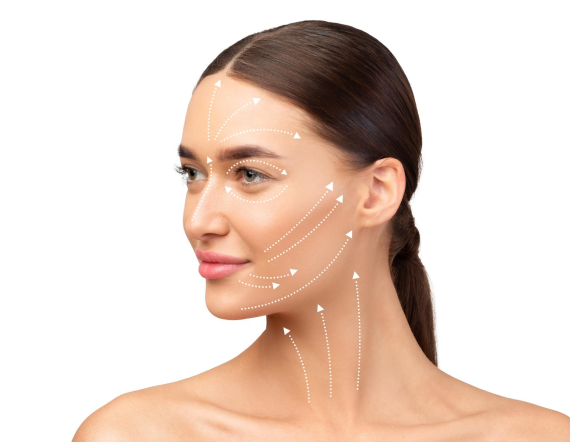
Volume restoration and structural lift are two different problems. Plasma BioFiller addresses the first; PDO threads address the second. When combined strategically, the two create what many providers now call a liquid thread lift protocol.
Here’s the logic: significant facial aging (or post-weight-loss facial changes) involves both deflation and descent. The tissues lose volume AND they fall. Filling without lifting can sometimes make the face look heavier rather than more youthful. Lifting without filling can leave the face looking tight but hollow.
PDO (polydioxanone) threads are thin, absorbable sutures that are placed under the skin to mechanically reposition tissue and stimulate collagen along the thread track. They address the structural lift component. Plasma BioFiller is then layered in to restore the soft-tissue volume where it’s been lost.
- The pairing works particularly well for:
- Jowl softening and jawline redefinition
- Midface and cheek restoration in patients who’ve experienced volume loss
- The under-eye and temple area, where HA fillers carry a higher complication risk
- Post-weight-loss patients who need both lift and volume but aren’t ready for surgery
For patients asking whether a liquid facelift can replace a surgical facelift for jawline contouring: the honest answer is “for some patients, yes.” Someone with moderate jowling and volume loss who doesn’t want surgery is often a strong candidate for a combined thread-and-BioFiller approach. Someone with severe skin laxity and significant excess tissue may ultimately need a surgical conversation. But that middle group, and it’s a large one, has more options than they’re typically told about.
You can explore PDO thread lifts and non-surgical facelift options at Weight & Body Solutions to get a clearer picture of what this approach can accomplish.
Who Is the Right Candidate for Plasma BioFiller?
Not everyone is. Being honest about candidacy matters more than selling a treatment to someone it won’t serve well.
- Good candidates typically include:
- Patients with mild to moderate volume loss in the cheeks, temples, or tear troughs
- People who’ve experienced facial deflation after significant weight loss
- Anyone with a history of reactions or concerns about synthetic filler materials
- Patients who prefer a gradual, natural-looking result over immediate volume
- Those who want skin quality improvement alongside volumizing (BioFiller stimulates collagen; HA does not)
- Plasma BioFiller may not be the best choice if:
- You need significant structural correction in one session (HA fillers or threads may be more effective)
- You want immediate, dramatic results with no waiting period
- You’re hoping for something reversible if you change your mind (there’s no enzyme equivalent to hyaluronidase for BioFiller)
One practical note about expectations: the initial volume from a BioFiller treatment looks more pronounced in the first 48 hours, then reduces as the liquid component absorbs over the following two weeks. This is normal. The collagen-building phase kicks in around weeks 2-4, and the final result typically settles around 6-8 weeks post-treatment. Most patients complete a series of 2-3 sessions to achieve their target outcome, with results lasting 6-9 months from the final session.
What to Expect at Your Appointment
The process is more involved than a standard filler appointment because of the blood draw and processing time, but it’s still an outpatient treatment done in-office.
- Here’s a general sequence:
- A consultation to assess your facial anatomy, goals, and medical history
- A small blood draw (typically 10-20 mL, similar to a routine lab draw)
- Processing time: the blood is centrifuged and the plasma is heated to create the gel, which takes roughly 20-30 minutes
- Topical numbing cream applied while the BioFiller processes
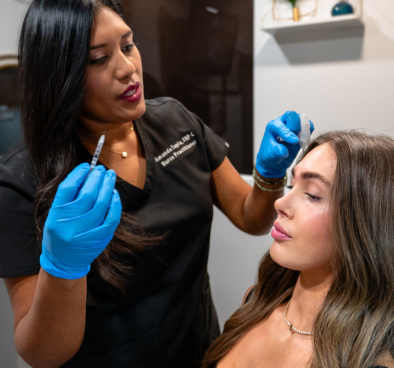
- Injection into targeted areas using a cannula or fine needle, depending on the location
- Post-treatment guidance on avoiding strenuous activity, sun exposure, and certain medications for 24-48 hours
Expect some swelling in the first 48 hours. It’s generally more noticeable than with HA filler because the material is being delivered in a more fluid state before it fully gels. Most patients find it manageable with light social commitments, though planning around a weekend or a few low-key days is smart.
Bottom Line
Plasma BioFiller isn’t a replacement for everything synthetic HA fillers do, and it’s not trying to be. What it offers is something genuinely different: volume that integrates with your tissue, skin quality improvement as a secondary benefit, and a risk profile that makes it particularly suited for delicate areas like the tear troughs and temples.
For patients who are scared of looking “done,” who’ve lost significant weight and want to restore a natural facial fullness, or who want to pair a volume treatment with structural lift from PDO threads, it’s a compelling option that deserves more attention than it typically gets.
If you’re weighing your options and want to talk through what your face actually needs (not just what’s being marketed loudest), reach out to the team at Weight & Body Solutions to schedule a consultation. A real conversation about your goals is always the best starting point.
You might also find it useful to browse the full non-surgical facelift overview or check out the top non-surgical treatments Tampa locals are choosing if you’re still in the early research phase.