Dermal Fillers After Weight Loss: Restoring Facial Volume Without Looking Overdone

You worked hard to lose the weight. You feel better, your clothes fit differently, your blood work has improved. But something about your face looks… off.
Maybe a little hollower than you expected. Maybe a little older than you felt before you started.
You’re not imagining it. And you’re not alone.
Facial volume loss is one of the most common and least talked-about side effects of significant weight loss, including weight loss supported by GLP-1 medications like Ozempic, Wegovy, and Mounjaro.
The good news: it’s addressable, without surgery and without the telltale “done” look that makes so many patients hesitate in the first place.
Why Losing Weight Can Age Your Face
Here’s something most weight loss programs don’t mention upfront: fat isn’t just stored in your abdomen, thighs, or arms. Your face has distinct fat compartments, and they deflate along with the rest of your body when you lose weight quickly.
The medical community sometimes calls this “Ozempic face,” though the phenomenon predates GLP-1 medications by decades. Any rapid or significant weight loss, whether from calorie restriction, bariatric surgery, or GLP-1-assisted programs, can accelerate fat loss in the face. And unlike the fat in your midsection, facial fat actually serves an important structural role. It supports the skin, defines the cheekbones, softens the under-eye area, and fills out the temples.
When those compartments deflate, skin that once had volume beneath it now has nothing holding it up. The result: sunken cheeks, hollowed temples, under-eye shadows that didn’t exist before, and a gaunt appearance that can make a person look years older despite being healthier than they’ve ever been.
GLP-1 medications may accelerate this effect because they suppress appetite so effectively. Patients eating at a significant caloric deficit for months at a time tend to lose weight faster than they would through diet and exercise alone, which means facial fat compartments may deflate more quickly. If you’re on Ozempic or Wegovy and you’ve noticed your face looking gaunt or hollow, that’s likely what’s happening.
It’s not a reason to stop your program. It’s a reason to talk to your provider.
The Anatomy of Natural-Looking Filler Results
This is where most patients get nervous, and honestly, the concern is valid. We’ve all seen filler results that look wrong: overfilled lips, pillow cheeks, a face that looks puffy rather than youthful. That’s not what volume restoration looks like when it’s done well.
The difference between natural and overdone comes down to three things: placement, proportion, and restraint.
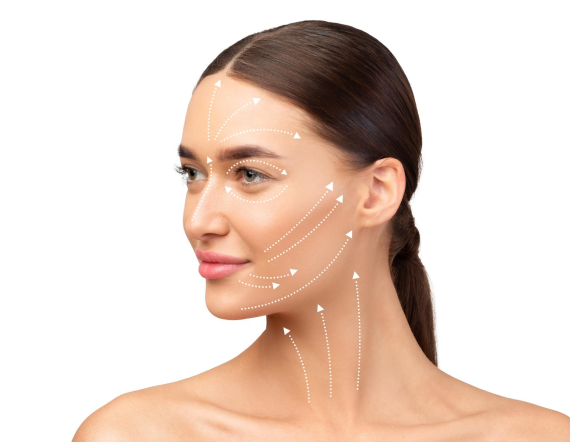
Midface and Cheekbones
When the midface has structure, the nasolabial folds soften, the jawline looks more defined, and the under-eye area improves, often without needing direct treatment there at all.
A skilled injector doesn’t just fill the hollows; they rebuild the architecture that used to hold everything in place.
Temples
A small amount of filler placed in the temple can restore that shape and make a disproportionate difference in how rested someone looks.
Most patients don’t even think to mention their temples during a consultation. A good injector will notice.
Under-Eye (Tear Trough)
Filler placed in this area can soften those shadows, but it requires precise technique and conservative dosing. Over-treating the tear trough is one of the most common sources of unnatural-looking results.
The key principle across all three areas is treating the face as a system rather than spot-treating individual concerns. When you restore volume proportionally, the result looks like you’ve rested well or turned back the clock slightly, not like you’ve had a procedure.
Filler Options at Weight & Body Solutions
Not all fillers are the same, and the right product depends on which area is being treated, how much correction is needed, and what kind of result you’re looking for.
RHA (Resilient Hyaluronic Acid)
RHA is a line of hyaluronic acid fillers and the primary filler line used at Weight & Body Solutions. What sets it apart is how it’s manufactured: a gentler process preserves more of the natural hyaluronic acid chain structure, which means the gel stretches and moves with facial expressions rather than resisting them.
RHA is the first and only hyaluronic acid filler FDA-approved specifically for dynamic wrinkles and folds, the kind that form when you smile, laugh, or talk, making it particularly well-suited for areas of high movement like the cheeks, nasolabial folds, and around the mouth.
Results typically last up to 15 months, and like the other hyaluronic acid options listed here, RHA is fully reversible.
Juvéderm
Juvéderm is a hyaluronic acid filler with a smooth, cohesive gel consistency. It’s particularly well-suited for the midface and cheekbones (Juvéderm Voluma XC is the specific formulation for volumizing) and areas that benefit from a soft, natural lift. Results typically last 12 to 18 months, sometimes longer in areas with less movement.
Restylane
Restylane is another hyaluronic acid filler, with a slightly firmer, more particulate consistency that makes it excellent for areas needing precise definition. Restylane Lyft works well for cheeks and midface; Restylane-L and Refyne are often used for softer areas.
Many injectors prefer Restylane products for the tear trough specifically because their consistency tends to integrate naturally in that area.
Versa
Versa is a newer hyaluronic acid filler known for its high water content, which means it can cause less initial swelling than some alternatives, making it easier to assess the result soon after treatment. It’s a versatile option for volume restoration and tends to be a good choice for patients who want a natural outcome with predictable longevity.
All three of these fillers are reversible. Hyaluronic acid fillers can be dissolved with hyaluronidase if needed, which is a meaningful safety net for patients who are nervous about the results.
Plasma BioFillers (PRP)
Plasma BioFillers use your own platelet-rich plasma to stimulate collagen production and improve skin quality from the inside out. This isn’t a volumizing filler in the traditional sense; it doesn’t add structural volume the way Juvéderm or Restylane does.
What it does is improve skin texture, elasticity, and luminosity, which can be a meaningful complement to structural filler treatment.
For patients recovering from significant weight loss, where both volume loss and skin quality changes may be present, combining structural fillers with a Plasma BiiFiller treatment can address both concerns simultaneously.
The result is volume that looks supported by healthy, resilient skin rather than sitting on top of thin or crepey skin.
How to Avoid Looking Overdone
The fear is real, and it’s worth addressing directly. Nobody wants to trade one version of feeling self-conscious for another.
The honest answer is that overdone results almost always come from one of three sources: too much product placed at once, product placed in the wrong anatomical location, or a provider who isn’t trained to think about the face as a whole.
A physician-supervised injectable practice builds in safeguards against all three.
Starting conservatively. A good injector treats less than they think you need on the first visit. You can always add more at a follow-up; you can’t un-do an aggressive first treatment without dissolving and starting over.
Reassessing over time. Fillers settle and integrate over two to four weeks after placement. What looks slightly undercorrected immediately after treatment often looks exactly right once the product has settled. Providers who schedule follow-up assessments at that point are practicing the right way.
Thinking in proportions, not volumes. The goal isn’t a specific number of syringes. It’s restoring a natural ratio between your facial features. That requires clinical judgment, not a formula.
Choosing the right injector. This is probably the most important factor of all. Our team approaches injectables from a medical foundation, meaning your anatomy, your health history, and the broader context of your body’s changes are all part of the conversation.
If you’re curious what conservative, natural-looking results look like, the before and after gallery is a good place to start.
The Integrated Advantage: Treating the Whole Picture
Here’s something worth thinking about if you’re in a GLP-1 program at Weight & Body Solutions: your provider already knows your treatment history.
They know how fast you’ve lost weight, what medications you’re taking, how your body has responded to treatment. That clinical context matters when planning aesthetic interventions. A provider who has supervised your weight loss is in a much better position to recommend timing and approach for volume restoration than one who is meeting you for the first time with no context.
This kind of continuity is built into how we work. Patients who come in for a GLP-1 program aren’t siloed into “weight loss patients” or “aesthetic patients.” They’re one person trying to feel better in their body, and the practice is set up to support that comprehensively.
If you’re curious how GLP-1 medications work and why they affect the body the way they do, this breakdown of GLP-1 options is worth reading. And if you’re exploring broader aesthetic options beyond fillers, the overview of non-surgical treatments covers some of the most effective options available.
For patients dealing with more pronounced skin laxity alongside volume loss, PDO thread lifts or the Endolift treatment may be worth discussing as complementary options during your consultation.
The Bottom Line
Losing weight shouldn’t mean feeling worse about how you look. Facial volume loss is a real, documented effect of significant weight loss, and GLP-1 medications can accelerate it. Dermal fillers, placed thoughtfully and conservatively by a skilled provider, can restore a natural, rested appearance without any of the exaggerated results that patients most fear.
The key is an individualized plan, a conservative approach, and a provider who understands your full picture. Not just your cheekbones, but your health history, your timeline, and what you’re actually trying to achieve.
If your face has changed since you started your weight loss journey and you’re ready to address it, reach out to the team at Weight & Body Solutions to schedule a consultation. The conversation starts with listening, not a syringe.